
What’s The Difference Between A Juicer And A Blender?
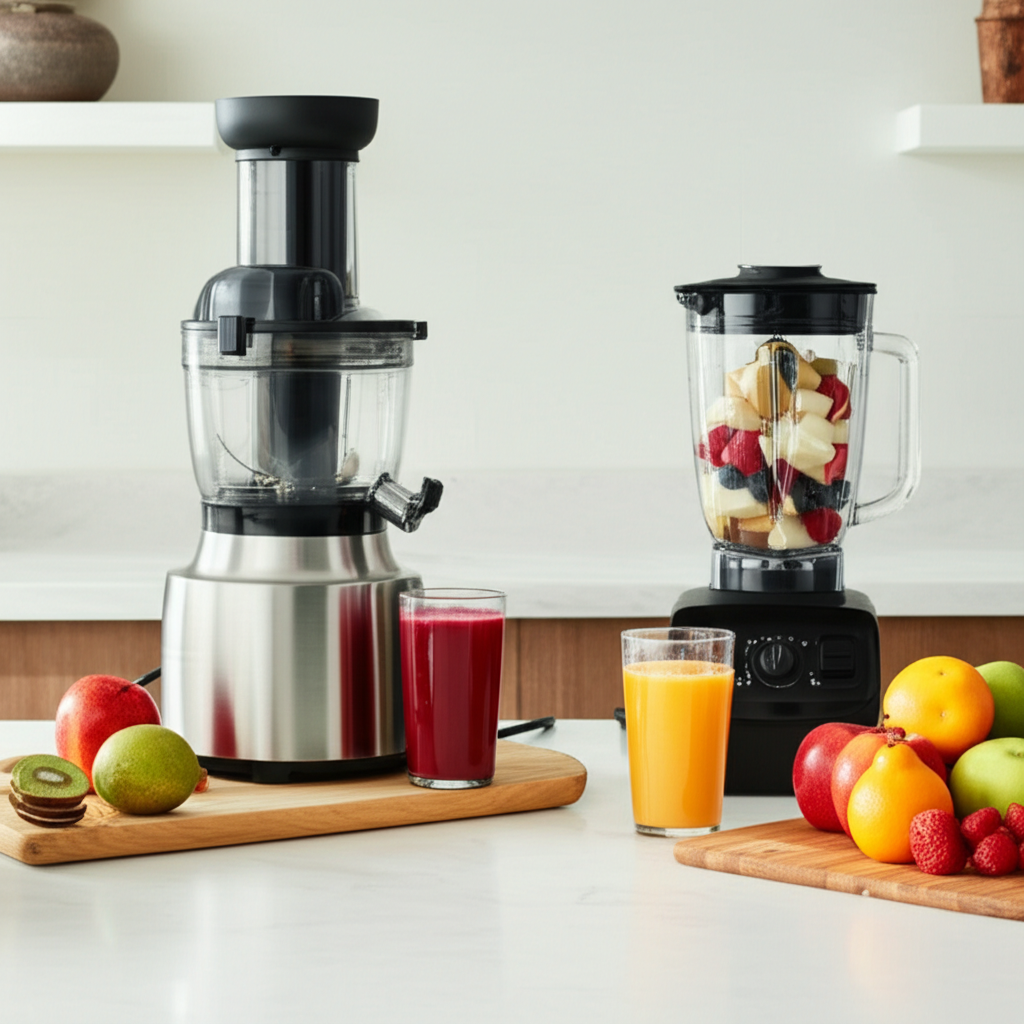
The core difference between a juicer and a blender lies in what they extract and retain. A juicer separates liquid from pulp, yielding pure juice, while a blender pulverizes entire ingredients, including fiber, into a smooth, thicker consistency.
Key Takeaways
- Juicers extract pure liquid, discarding pulp.
- Blenders liquefy whole ingredients, retaining fiber.
- Choose a juicer for clear, pulp-free beverages.
- Opt for a blender for smoothies and thicker preparations.
- Understand nutrient differences based on fiber retention.
- Consider ease of cleaning and maintenance.
Navigating the world of kitchen appliances can sometimes feel like deciphering a new technological dialect. You’re interested in boosting your daily intake of fruits and vegetables, perhaps exploring the vibrant world of homemade beverages. You’ve likely encountered two prominent contenders: the juicer and the blender. Both promise health benefits and delicious results, but what’s the difference between a juicer and a blender? It’s a common point of confusion, and understanding their distinct functions is key to choosing the right tool for your needs. This article will demystify these appliances, breaking down their mechanics, outputs, and ideal uses. Let’s embark on a clear, step-by-step exploration to help you make an informed decision.
Understanding the Core Mechanics: How They Work

At their heart, both juicers and blenders are designed to process fruits and vegetables. However, their internal mechanisms are fundamentally different, leading to vastly different end products. Think of it as two distinct approaches to extracting goodness from produce.
The Juicer: Extraction by Separation
A juicer’s primary goal is to separate the liquid content of fruits and vegetables from their solid matter, primarily the pulp and fiber. There are several types of juicers, but they all operate on this principle of separation.
Centrifugal Juicers
These are the most common and often the most affordable type. They work by spinning a cutting disc at very high speeds. As the produce is fed into the machine, it’s shredded and then flung against a mesh filter. The liquid is forced through the mesh, while the pulp is collected in a separate compartment.
Process: Shredding and high-speed spinning.
Output: Clear juice with minimal pulp.
Speed: Generally fast.
Heat: Can generate some heat due to friction, potentially affecting enzymes.
Masticating Juicers (Slow Juicers)
These juicers use a single, slow-moving auger (a screw-like mechanism) to crush and press the produce against a screen. This method is gentler and extracts more juice, especially from leafy greens and harder vegetables.
Process: Slow crushing and pressing.
Output: High yield of juice, less foam, and potentially better nutrient retention due to lower heat generation.
Speed: Slower than centrifugal juicers.
Versatility: Can often handle nuts, seeds, and making pasta.
Twin Gear Juicers (Triturating Juicers)
These are the most advanced and efficient type, using two interlocking gears that crush and press produce simultaneously. They are known for their high juice yield and ability to process a wide variety of ingredients, including fibrous ones.
Process: Dual-gear crushing and squeezing.
Output: Very high juice yield, minimal oxidation.
Speed: Slow and efficient.
Cost: Typically the most expensive.
The key takeaway for juicers is that they are designed to remove the fiber. This results in a liquid that is easily digestible and absorbed quickly by the body, but it also means that some of the beneficial fiber is lost.
The Blender: Liquefaction by Pulverization
A blender, on the other hand, works by using rapidly rotating blades at the bottom of a jar to chop, dice, and liquefy entire ingredients. The goal here is not separation, but rather to break down everything into a smooth, uniform mixture.
How Blenders Operate
The blades in a blender spin at high speeds, creating a vortex that pulls ingredients down towards them. This action chops and pulverizes everything – fruits, vegetables, ice, nuts, seeds, and liquids – into a smooth consistency. The entire ingredient, including skins, seeds (if soft enough), and most importantly, the fiber, is retained in the final product.
Process: High-speed chopping and pulverizing.
Output: Thicker, smoothie-like consistency, retaining all parts of the ingredient.
Versatility: Excellent for smoothies, soups, sauces, purees, and even crushing ice.
Nutrient Profile: Retains fiber, which aids digestion and promotes satiety.
The result is a beverage that is often thicker and more filling than juice because it contains all the solid matter of the original ingredients.
Output and Nutritional Considerations: Juice vs. Smoothie
The difference in how juicers and blenders operate directly impacts the nutritional profile and texture of the final product. This is a crucial factor when deciding which appliance best suits your health goals and preferences.
Juice: Concentrated Nutrients, Minus the Fiber
When you drink juice, you are consuming a concentrated dose of vitamins, minerals, and phytonutrients from the fruits and vegetables. Because the fiber has been removed, these nutrients are absorbed very quickly into your bloodstream.
Pros of Juice:
Rapid Nutrient Absorption: Ideal for those needing a quick energy boost or specific nutrient intake.
Easy Digestion: Beneficial for individuals with digestive issues who may struggle to process large amounts of fiber.
Refreshing and Hydrating: Primarily water-based, making it a hydrating beverage.
Pure Flavor: You get the unadulterated taste of fruits and vegetables.
Cons of Juice:
Loss of Fiber: This is the primary drawback. Fiber is essential for digestive health, blood sugar regulation, and satiety.
Higher Sugar Concentration: Without fiber to slow absorption, the natural sugars in fruits can lead to blood sugar spikes.
Less Filling: You can consume more liquid calories quickly without feeling as full compared to a smoothie.
Waste: Significant pulp is produced, which needs to be discarded (though it can be composted or used in some recipes).
For example, a glass of pure orange juice, while rich in Vitamin C, lacks the fiber found in a whole orange. This means the sugar from the orange is absorbed more rapidly.
Smoothies: Whole Food Powerhouse
Smoothies made in a blender retain all the components of the fruits and vegetables, including the fiber. This makes them a more complete meal or snack option.
Pros of Smoothies:
Fiber Rich: Promotes digestive health, helps regulate blood sugar, and increases feelings of fullness.
Nutrient Dense: You get all the vitamins, minerals, antioxidants, and fiber from the whole ingredients.
More Filling: The fiber and whole food content make smoothies more satiating, acting as a meal replacement.
Versatile: Easy to add protein powders, nuts, seeds, yogurt, or oats for a more comprehensive nutritional profile.
Less Waste: Utilizes the entire fruit or vegetable.
Cons of Smoothies:
Slower Digestion: While generally good, it might not be ideal for those with severe digestive sensitivities.
Can Be High in Calories/Sugar: If too many high-calorie ingredients or excessive fruit are added, it can become a calorie bomb.
Texture: Some prefer the clear liquid of juice over the thicker texture of a smoothie.
Consider a green smoothie made with spinach, kale, banana, and almond milk. You’re getting the vitamins from the greens, the energy from the banana, and the fiber from all the ingredients, making it a balanced and satisfying option.
Key Differences Summarized in a Table
To further clarify, let’s look at a direct comparison of the two appliances. This table highlights the essential distinctions at a glance.
| Feature | Juicer | Blender |
|---|---|---|
| Primary Function | Extracts liquid, separates pulp. | Pulverizes whole ingredients. |
| Output Texture | Thin, liquid. | Thick, smooth, often creamy. |
| Fiber Content | Minimal to none. | Retains all fiber. |
| Nutrient Absorption | Faster. | Slower, due to fiber. |
| Satiety (Feeling Full) | Low. | High. |
| Best For | Pure juices, detox drinks. | Smoothies, soups, sauces, purees. |
| Pulp Handling | Discards pulp. | Incorporates pulp. |
| Waste Product | Pulp. | Minimal (e.g., pits if not removed). |
This table underscores that the choice between a juicer and a blender is largely dictated by your desired outcome: a pure, refreshing liquid versus a substantial, fiber-rich concoction.
When to Use Which Appliance: Practical Applications
Understanding the fundamental differences is one thing; knowing when to deploy each tool in your kitchen is another. Both appliances have their strengths and excel in different scenarios.
Choosing a Juicer for Specific Needs
A juicer is your go-to appliance if you are specifically seeking the benefits of extracted fruit and vegetable liquids without the pulp.
Detox or Cleanses: Many popular detox programs recommend consuming large quantities of fresh juices. Juicers are essential for this.
Specific Nutrient Boosts: If you want to quickly ingest high doses of certain vitamins and minerals from, say, a large amount of carrots or leafy greens, juicing can be efficient.
Refreshing Beverages: For a light, hydrating drink that’s easy on the digestive system, a fresh juice is perfect. Think of a crisp apple and celery juice on a hot afternoon.
Culinary Applications: Juices can be used in marinades, salad dressings, or as bases for sorbets.
According to the USDA FoodData Central, a single cup of raw spinach contains about 0.7 grams of fiber. When juiced, this fiber is removed, making the spinach juice a more concentrated source of vitamins like A and K, but without the fibrous benefits.
Choosing a Blender for Versatile Creations
A blender’s ability to pulverize ingredients makes it incredibly versatile for a wide range of culinary creations.
Smoothies: This is the most common use. You can pack a blender with fruits, vegetables, protein powder, nut butters, seeds, and liquids for a complete meal or snack.
Soups: Blenders can create silky smooth hot or cold soups. After cooking vegetables, you can blend them with broth and seasonings for a velvety texture.
Sauces and Dips: From pesto to hummus to creamy salad dressings, blenders are excellent for achieving smooth consistency.
Purees: Baby food, fruit purees for desserts, or vegetable purees for side dishes are easily made with a blender.
Nut Milks and Butters: High-powered blenders can even make homemade nut milks and smooth nut butters.
Crushing Ice: Many blenders can handle crushing ice for cocktails or frozen drinks.
A key advantage of blenders is their ability to incorporate ingredients that might be too fibrous or tough to juice, such as dates for sweetness or nuts for creaminess.
Ease of Cleaning and Maintenance
This is a practical consideration that can significantly impact your usage habits. No one enjoys spending excessive time cleaning kitchen appliances.
Juicer Cleaning
Juicers, especially centrifugal ones, can have multiple parts that need thorough cleaning, including the mesh filter, pulp container, and spout. Some masticating juicers also have complex screens and augers.
Challenges: Pulp can get stuck in mesh screens, requiring brushing. Some juicers have more intricate designs that are harder to reach.
Tips: Cleaning a juicer immediately after use is often easier than letting pulp dry. Many parts are dishwasher safe, but always check the manual. Some high-end juicers are designed for easier cleaning.
Blender Cleaning
Blenders are generally simpler to clean.
Challenges: Blade assembly can be sharp and require careful handling. Some blender jars have crevices that can be tricky.
Tips: A quick clean-up often involves filling the jar with warm water, adding a drop of dish soap, and blending for 30-60 seconds. Rinse thoroughly. For tougher residues, a soft brush can be used.
Ultimately, the ease of cleaning can depend on the specific model and brand of both juicers and blenders. Reading reviews focusing on this aspect can be very helpful.
Pro Tip: The Versatility of Pulp
Don’t discard the pulp from your juicer immediately! It’s a rich source of fiber and nutrients. You can:
Add it to baked goods like muffins or bread.
Incorporate it into veggie burgers or fritters.
Use it as compost for your garden.
Dry it out and grind it into a fiber powder.
This tip turns a potential waste product into a valuable ingredient, enhancing the sustainability of your juicing efforts.
Cost and Investment
The price range for both juicers and blenders can vary significantly, from budget-friendly options to high-end professional models.
Juicer Price Range
Entry-level centrifugal juicers: Can be found for $50-$150.
Mid-range masticating juicers: Typically $150-$400.
High-end masticating and twin-gear juicers: Can range from $400 to over $1000.
The cost often reflects durability, motor power, juice yield, and ease of cleaning.
Blender Price Range
Basic personal blenders (e.g., for single smoothies): $30-$100.
Countertop blenders (mid-range): $100-$300.
High-performance blenders (e.g., Vitamix, Blendtec): $400-$700+.
High-performance blenders offer more power, durability, and versatility, capable of handling tougher ingredients and achieving smoother textures.
When considering the investment, think about how often you plan to use the appliance and what types of recipes you envision making. For someone primarily interested in daily smoothies, a good quality blender might be a more practical investment than a high-end juicer.
Which One Is Right for You? A Decision Guide
To help you make a definitive choice, let’s consider some scenarios:
You should consider a juicer if:
- You prefer clear, pulp-free beverages.
- You want to quickly ingest a concentrated amount of vitamins and minerals.
- You are undertaking a juice cleanse or detox program.
- You have digestive issues and find it hard to process fiber.
- You enjoy experimenting with a wide variety of fruit and vegetable combinations for pure liquid enjoyment.
You should consider a blender if: - You want to make smoothies, protein shakes, or meal replacements.
- You plan to incorporate whole fruits, vegetables, nuts, seeds, and grains into your drinks.
- You want an appliance that can also make soups, sauces, dips, and purees.
- You value retaining all the fiber and nutrients from your ingredients.
- You are looking for a more versatile kitchen tool for a wider range of recipes.
Many health and nutrition experts, like those at the USDA’s MyPlate program, emphasize the importance of whole foods, which aligns well with the use of blenders to retain fiber. However, both appliances can play a role in a healthy diet, depending on individual needs and preferences.
Frequently Asked Questions (FAQ)
Q1: Can I use a blender to make juice?
While you can blend fruits and vegetables with water, the result will be a smoothie, not juice, as the fiber remains. To make true juice, you would need to strain the blended mixture thoroughly, which is time-consuming and inefficient compared to using a juicer.
Q2: Can I use a juicer to make smoothies?
No, a juicer cannot make smoothies. It is designed to extract liquid and discard pulp. You would end up with juice and a pile of pulp, not a blended, cohesive smoothie.
Q3: Which appliance retains more nutrients?
This is nuanced. Blenders retain all nutrients present in the whole food, including fiber. Juicers concentrate certain water-soluble vitamins and minerals but lose the fiber and some nutrients bound to it. For overall whole-food benefits, blenders often have an edge due to fiber retention.
Q4: Are juicers and blenders difficult to clean?
Cleaning difficulty varies by model. Generally, blenders are easier to clean with a quick rinse-and-blend method. Juicers, especially those with fine mesh screens, can require more effort, though many modern designs are improving in this regard.
Q5: Is juicing or blending healthier?
Both can be healthy. Blending whole foods into smoothies provides fiber, promoting better digestion and sustained energy. Juicing offers concentrated vitamins and minerals with easier absorption, but lacks fiber and can lead to sugar spikes if not balanced. The “healthiest” option depends on your personal dietary goals, digestive health, and what you’re trying to achieve.
Q6: Which appliance is more expensive?
Both appliances have a wide price range. High-performance blenders and high-end masticating juicers can both be significant investments, often costing several hundred dollars. Basic models of both are available at more affordable price points.
Q7: Can I juice leafy greens with both appliances?
Blenders can incorporate leafy greens into smoothies, but they won’t break them down as finely as a powerful blender. Masticating juicers are generally better at juicing leafy greens than centrifugal juicers, which may struggle to extract much liquid from them.
Conclusion
Understanding what’s the difference between a juicer and a blender boils down to their fundamental purpose: separation versus pulverization. A juicer meticulously extracts the liquid essence of fruits and vegetables, offering a pure, easily digestible drink rich in water-soluble nutrients. Conversely, a blender pulverizes entire ingredients, retaining all the precious fiber and creating thicker, more satiating beverages and dishes like smoothies, soups, and sauces.
Your choice hinges on your personal health objectives, culinary preferences, and lifestyle. If you seek rapid nutrient delivery and a light, refreshing beverage, a juicer is your ally. If you aim for comprehensive whole-food nutrition, sustained energy, and a versatile kitchen workhorse, a blender will likely serve you better. Both appliances, when used wisely, can be valuable additions to a health-conscious kitchen, contributing to a more vibrant and nutritious diet.