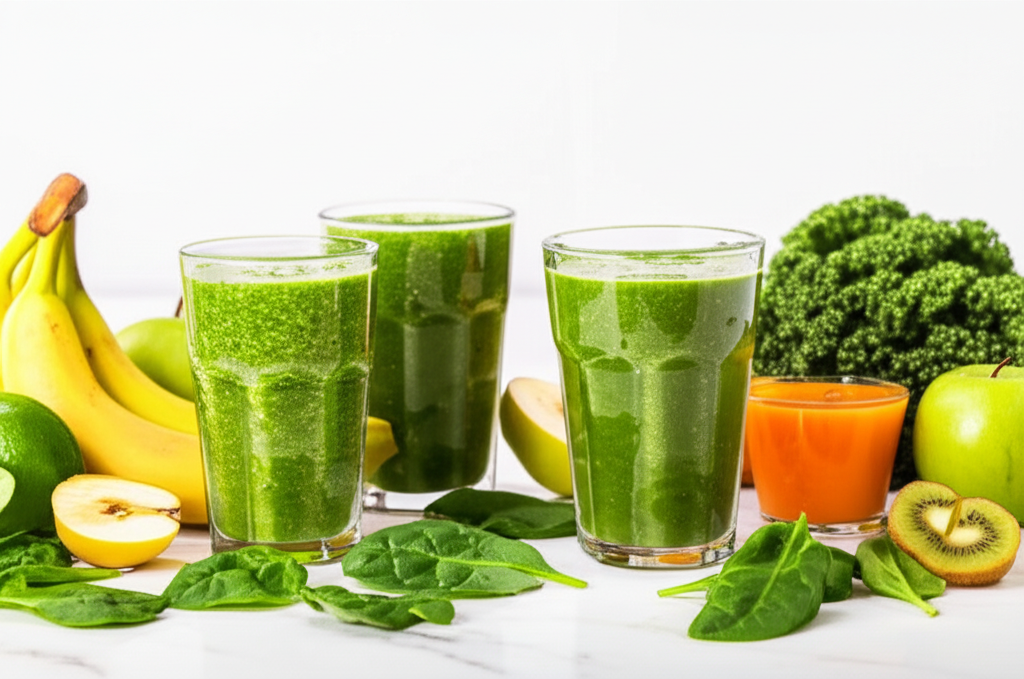
A typical green smoothie can range from 150 to 600 calories, depending heavily on its ingredients. It’s not just about the greens; fruits, nuts, seeds, and sweeteners significantly impact the calorie count. Understanding these components is key to making a calorie-controlled green smoothie.
Key Takeaways
- Discover the surprising calorie range of green smoothies.
- Identify high-calorie ingredients that boost smoothie energy.
- Learn simple swaps for a lighter, nutrient-rich drink.
- Master portion control for effective calorie management.
- Create delicious green smoothies for your wellness goals.
How Many Calories Is A Green Smoothie: Your Shocking Truth
Are you curious about the calorie count in your favorite green smoothie? You’re not alone! Many people think green smoothies are automatically low in calories, but the truth can be quite surprising. It’s easy to accidentally pack a lot of energy into one glass. Don’t worry, though! We’re here to break down exactly how many calories are in a green smoothie. We’ll explore what makes them go up or down. Get ready to become a smoothie calorie expert!
Understanding the Calorie Components of a Green Smoothie
The calorie count of any green smoothie is a direct reflection of its ingredients. Think of it like building with blocks; each ingredient adds a certain amount of nutritional value and, importantly, calories. The base of your smoothie – the liquid – is often the lowest calorie component. Then come the greens, which are generally very low in calories. The real calorie drivers are usually the fruits, healthy fats like nuts and seeds, and any added sweeteners.
It’s crucial to remember that calories aren’t the only measure of a smoothie’s healthiness. Nutrients, fiber, and vitamins play a huge role. However, if you’re tracking your calorie intake for weight management or specific dietary goals, knowing these numbers is essential. We’ll help you understand the calorie impact of each category of ingredients so you can make informed choices.
The Calorie Impact of Your Green Smoothie Base

The liquid you choose for your green smoothie sets the foundation for its calorie content. Some liquids are virtually calorie-free, while others can add a significant number of calories even before you add any solids. For beginners, it’s helpful to start with lower-calorie bases and then build up from there.
Water: The Zero-Calorie Champion
The simplest and most calorie-free option is plain water. It adds hydration without contributing any calories, making it an excellent choice if your primary goal is to keep the smoothie’s calorie count as low as possible. It also allows the flavors of your fruits and vegetables to shine through more prominently.
Unsweetened Plant-Based Milks: A Light Option
Options like unsweetened almond milk, cashew milk, or soy milk are popular choices. Unsweetened almond milk, for example, typically contains around 30-40 calories per cup. Soy milk can be a bit higher, around 80-100 calories per cup, but it also offers more protein. Always check the label to ensure you’re choosing the unsweetened variety, as sweetened versions can add 10-20 grams of sugar and significantly more calories.
Coconut Water: Naturally Sweet Hydration
Coconut water is known for its electrolytes and natural sweetness. A cup of unsweetened coconut water usually contains about 45-60 calories. While it’s a good source of potassium, its natural sugars mean it has more calories than water or unsweetened plant milks. It can be a refreshing base, especially after a workout.
Dairy Milk: Nutrient-Rich but Higher Calorie
If you opt for dairy milk, the calorie count will vary by fat content. Skim milk has about 90 calories per cup, while whole milk can have over 150 calories per cup. Dairy milk also provides protein and calcium, but it’s a more calorie-dense choice compared to water or unsweetened plant milks.
The Role of Greens in Your Smoothie’s Calorie Count
This is where the “green” in green smoothie comes into play! Leafy greens are nutritional powerhouses and are remarkably low in calories. They provide fiber, vitamins, and minerals with minimal caloric contribution, making them ideal for bulking up your smoothie without adding significant energy. For beginners, incorporating greens is a fantastic way to boost nutrient intake.
Spinach: The Mild Gateway Green
Spinach is often the go-to green for beginners because its flavor is very mild and easily masked by fruits. A generous cup of fresh spinach (about 30 grams) contains only about 7 calories. Even a large handful or two will add very few calories to your smoothie, making it a fantastic base for nutrient density.
Kale: Nutrient-Dense and Slightly More Assertive
Kale is another popular choice, packed with vitamins A, C, and K. One cup of chopped kale (about 67 grams) has around 33 calories. While it has more calories than spinach, it also boasts a more robust nutrient profile. Its flavor is stronger, so you might want to pair it with sweeter fruits. Removing the tough stems can also improve texture.
Other Greens: Romaine, Swiss Chard, and More
Romaine lettuce is mild and hydrating, with about 8 calories per cup. Swiss chard is slightly more robust in flavor and has about 7 calories per cup. The calorie difference between most leafy greens is minimal, so feel free to experiment based on taste and availability.
Fruits: The Flavor and Calorie Contributors
Fruits are where many green smoothies get their delicious sweetness and flavor, but they are also significant contributors to the calorie count. The type and amount of fruit you use will dramatically influence how many calories your smoothie contains. Understanding this is key to managing your smoothie’s energy content.
Berries: Lower Sugar, High Antioxidants
Berries like strawberries, blueberries, raspberries, and blackberries are excellent choices for green smoothies. They are lower in sugar and calories compared to many other fruits and are loaded with antioxidants. For instance, one cup of strawberries (about 150g) is around 50 calories, and a cup of blueberries (about 148g) is around 85 calories. They add a lovely tartness and vibrant color.
Bananas: Creaminess and Natural Sweetness
Bananas are a smoothie staple for a reason: they add incredible creaminess and natural sweetness. However, they are also higher in sugar and calories. A medium banana (about 118g) can contain around 105 calories. Using half a banana is a great way to get that creamy texture without a huge calorie spike.
Tropical Fruits: Sweetness with Higher Calories
Fruits like mangoes, pineapples, and papayas are wonderfully sweet and tropical. A cup of diced mango (about 165g) is around 99 calories, and a cup of pineapple chunks (about 165g) is about 82 calories. While delicious, these fruits contribute more calories and sugar than berries.
Apples and Pears: Fiber-Rich Options
Apples and pears offer good fiber content and a pleasant sweetness. A medium apple (about 182g) is around 95 calories, and a medium pear (about 178g) is around 101 calories. These are good options for adding subtle sweetness and thickness.
Adding Healthy Fats: Boosting Nutrition and Calories
Healthy fats are essential for nutrient absorption, satiety, and overall health. However, they are also the most calorie-dense macronutrient. A small amount can add a lot of calories, so moderation is key if you’re watching your intake.
Avocado: Creaminess and Healthy Fats
Avocado adds incredible creaminess and healthy monounsaturated fats to smoothies. A quarter of an avocado (about 30g) contains roughly 50 calories. It’s a fantastic way to make a smoothie more filling, but be mindful of the portion size.
Nuts and Seeds: Powerhouses of Nutrients
- Chia Seeds: One tablespoon (about 12g) has around 60 calories and is a great source of fiber and omega-3 fatty acids. They also help thicken the smoothie.
- Flaxseeds: One tablespoon (about 7g) contains about 37 calories. They are best consumed ground to aid nutrient absorption.
- Hemp Seeds: One tablespoon (about 10g) offers about 55 calories and provides protein and healthy fats.
- Almonds, Walnuts, Cashews: A small handful (about 1 oz or 28g) of nuts can add 160-200 calories. It’s often better to use nut butters in moderation.
Nut Butters: Concentrated Flavor and Fat
Nut butters like peanut butter, almond butter, or cashew butter are calorie-dense. Two tablespoons of peanut butter (about 32g) can easily add 190-200 calories. They add wonderful flavor and creaminess but should be used sparingly if calorie control is a priority.
Sweeteners and Boosters: The Hidden Calorie Culprits
Sometimes, even with fruits, a smoothie might not be sweet enough for some palates. Added sweeteners and other “boosters” can significantly increase the calorie and sugar content of your green smoothie.
Natural Sweeteners
- Honey: One tablespoon of honey has about 64 calories.
- Maple Syrup: One tablespoon of maple syrup has about 52 calories.
- Agave Nectar: One tablespoon of agave nectar has about 60 calories.
While natural, these still contribute sugar and calories. Often, the sweetness from fruits is sufficient, especially from ripe bananas or dates.
Dates: Natural Sweetness and Fiber
Dates are a fantastic natural sweetener, providing fiber and minerals along with sweetness. However, they are calorie-dense. One pitted Medjool date (about 24g) contains around 66 calories. Using one or two dates can significantly sweeten a smoothie.
Protein Powders and Other Add-ins
Many people add protein powders, collagen peptides, or other supplements. The calorie count for these varies widely. A typical scoop of whey or plant-based protein powder can range from 100 to 150 calories. While beneficial for protein intake, they do add to the overall calorie count.
Calculating Your Green Smoothie’s Calorie Count
To get a clear picture of “how many calories is a green smoothie,” you need to do a little math. It’s simpler than you think, especially with online tools and apps. Here’s a breakdown of how to approach it:
Step 1: List Your Ingredients
Write down every single thing you put into your smoothie. Be specific about quantities (e.g., 1 cup spinach, 1/2 banana, 1 tablespoon chia seeds).
Step 2: Find the Calorie Count for Each Ingredient
Use reliable sources to find the calorie information for each ingredient. Reputable sources include:
- The United States Department of Agriculture (USDA) FoodData Central database: https://fdc.nal.usda.gov/
- Nutrition tracking apps (like MyFitnessPal, Cronometer)
- Packaging labels on your ingredients
Step 3: Sum Up the Calories
Add the calorie counts for all your ingredients together. This will give you the total calorie count for your specific green smoothie recipe.
Example Calculation:
Let’s create a sample beginner green smoothie and calculate its approximate calories:
- 1 cup Unsweetened Almond Milk: 30 calories
- 1 cup Spinach: 7 calories
- 1/2 Medium Banana: 53 calories
- 1/2 cup Strawberries: 25 calories
- 1 tablespoon Chia Seeds: 60 calories
Total: 30 + 7 + 53 + 25 + 60 = 175 calories
This is a great example of a relatively low-calorie, nutrient-dense green smoothie. Now, let’s look at a slightly more indulgent version:
- 1 cup Whole Milk: 150 calories
- 1 cup Kale: 33 calories
- 1 Whole Medium Banana: 105 calories
- 1/2 cup Mango chunks: 50 calories
- 1 tablespoon Peanut Butter: 100 calories
Total: 150 + 33 + 105 + 50 + 100 = 438 calories
As you can see, the ingredients make a significant difference! This highlights the “shocking truth” – it’s easy to create smoothies that are much higher in calories than you might assume.
Calorie Ranges of Common Green Smoothie Ingredients
To make your calorie calculations easier, here’s a table summarizing the approximate calorie counts for common green smoothie ingredients. Remember that these are averages and can vary based on size, ripeness, and specific product formulations.
| Ingredient | Quantity | Approximate Calories |
|---|---|---|
| Liquids (per cup, ~240ml) | ||
| Water | 1 cup | 0 |
| Unsweetened Almond Milk | 1 cup | 30-40 |
| Unsweetened Soy Milk | 1 cup | 80-100 |
| Unsweetened Coconut Milk (beverage) | 1 cup | 45-60 |
| Skim Milk | 1 cup | 90 |
| Whole Milk | 1 cup | 150 |
| Greens (per cup, packed) | ||
| Spinach | 1 cup | 7 |
| Kale | 1 cup | 33 |
| Romaine Lettuce | 1 cup | 8 |
| Fruits (typical serving) | ||
| Strawberries | 1 cup (halved) | 50 |
| Blueberries | 1 cup | 85 |
| Banana (medium) | 1 medium | 105 |
| Banana (1/2 medium) | 1/2 medium | 53 |
| Mango chunks | 1 cup | 99 |
| Pineapple chunks | 1 cup | 82 |
| Apple (medium) | 1 medium | 95 |
| Healthy Fats (typical serving) | ||
| Avocado | 1/4 medium | 50 |
| Chia Seeds | 1 tbsp | 60 |
| Flaxseeds (ground) | 1 tbsp | 37 |
| Hemp Seeds | 1 tbsp | 55 |
| Peanut Butter | 2 tbsp | 190 |
| Sweeteners (per tbsp) | ||
| Honey | 1 tbsp | 64 |
| Maple Syrup | 1 tbsp | 52 |
| Dates (Medjool) | 1 | 66 |
Tips for Making Lower-Calorie Green Smoothies
Creating a delicious and healthy green smoothie that fits your calorie goals is entirely achievable. It’s all about making smart ingredient choices and understanding portion sizes. Here are some practical tips for beginners:
- Prioritize Low-Calorie Liquids: Start with water, unsweetened almond milk, or unsweetened cashew milk as your base. These add hydration without significant calories.
- Load Up on Leafy Greens: Don’t be shy with spinach, romaine, or other mild greens. They are very low in calories and add bulk and nutrients.
- Be Mindful of Fruit Portions: While fruits are healthy, their sugar and calories add up. Stick to about 1/2 to 1 cup of fruit per smoothie. Berries are your best bet for lower sugar and calories.
- Use Fats Wisely: If you add avocado, nuts, seeds, or nut butters, measure them carefully. A small amount goes a long way. Try using just 1 teaspoon of nut butter or 1 tablespoon of seeds.
- Skip Added Sweeteners: Rely on the natural sweetness of ripe fruits. If you need a touch more sweetness, try a very small amount of honey or a date, but often it’s unnecessary.
- Measure Your Ingredients: Especially when you’re starting, measuring helps you understand how much you’re consuming. This is crucial for calorie tracking.
- Consider Portion Size: A large smoothie will naturally have more calories than a smaller one, even with the same ingredients. Think about your serving size.
By following these tips, you can easily create green smoothies that are both delicious and aligned with your wellness objectives.
Pro Tip: Embrace Citrus for Flavor Without Calories!
Want to add a zing to your green smoothie without adding calories? Citrus fruits like lemon, lime, or even a splash of orange juice (in moderation) can elevate the flavor profile. A squeeze of lime can cut through the sweetness and make the greens taste fresher, while a bit of lemon can brighten the whole drink. This is a fantastic way to boost flavor complexity without impacting your calorie count significantly.
Smoothie Making: Tools and Techniques for Beginners
You don’t need a fancy, high-powered blender to make a great green smoothie. Even basic blenders can get the job done, especially with a few smart techniques. For those without blenders, we’ll cover that too!
Blender Basics
- Choosing a Blender: For beginners, a personal blender (like NutriBullet or Ninja) or a standard countertop blender is perfect. Look for something with at least 2 speeds.
- Order of Ingredients: For best results, add liquids first, followed by soft ingredients (greens, yogurt), then harder ingredients (frozen fruit, ice, nuts). This helps the blades move more freely.
- Frozen vs. Fresh Fruit: Frozen fruit makes smoothies thicker and colder without needing ice, which can dilute the flavor. If using fresh fruit, you might need to add a few ice cubes.
- Patience is Key: Let your blender run for at least 30-60 seconds, or until the mixture is completely smooth. Scrape down the sides if needed.
No Blender? No Problem!
Making smoothies without a blender is possible, though it requires a bit more effort and may result in a slightly chunkier texture. This method is great for those who don’t own a blender or want to make a quick single serving.
- Mash Your Fruit: Mash soft fruits like bananas or ripe berries thoroughly with a fork in a bowl until they form a puree.
- Finely Chop Greens: Mince your leafy greens as finely as possible with a knife.
- Combine and Stir: Add the mashed fruit, finely chopped greens, and your liquid base (water, juice, or milk) to the bowl.
- Whisk Vigorously: Use a whisk or a sturdy fork to vigorously mix everything together. Continue whisking until the ingredients are as well combined as possible. You can also use a jar with a tight-fitting lid – add all ingredients and shake it hard!
- Optional: Strain: For a smoother texture, you can strain the mixture through a fine-mesh sieve, pushing the liquid through with a spoon.
While this won’t give you the ultra-smooth consistency of a blended smoothie, it’s a perfectly healthy and refreshing way to get your greens and fruits!
Frequently Asked Questions About Green Smoothie Calories
Here are some common questions beginners have about the calorie content of green smoothies.
Q1: Are all green smoothies low in calories?
A1: No, not necessarily. While greens are low in calories, the addition of fruits, nuts, seeds, nut butters, and sweeteners can significantly increase the calorie count. A smoothie packed with banana, dates, and nut butter can be quite calorie-dense.
Q2: How can I make a green smoothie that is under 200 calories?
A2: Focus on a water or unsweetened plant-based milk base, plenty of leafy greens, and limit your fruit to about half a cup of berries or half a banana. Avoid added fats and sweeteners. For example: 1 cup water, 2 cups spinach, 1/2 cup strawberries, 1/2 tbsp chia seeds.
Q3: Is it okay to add protein powder to my green smoothie?
A3: Yes, it’s perfectly fine and can be a great way to boost satiety and muscle support. Just be aware that most protein powders add between 100-150 calories per scoop. Factor this into your daily calorie intake.
Q4: Should I be worried about the sugar in fruit for my green smoothie?
A4: Fruit contains natural sugars, but it also provides fiber, vitamins, and antioxidants, which help mitigate the impact of sugar on your body. The key is portion control. Using whole fruits is always better than fruit juices, which lack fiber and are concentrated sources of sugar.
Q5: Can I drink a green smoothie as a meal replacement?
A5: Yes, you can, but it needs to be balanced. For a meal replacement smoothie, aim for 300-500 calories and ensure it contains a good source of protein (like protein powder or Greek yogurt), healthy fats (like avocado or seeds), and fiber (from greens and fruits) to keep you full and satisfied.
Q6: How do I make my green smoothie taste good without adding sugar?
A6: Use naturally sweet fruits like ripe bananas, mangoes, or dates. Berries add a tart sweetness. A squeeze of lemon or lime juice can brighten flavors. Cinnamon or vanilla extract can also add perceived sweetness without calories. Experimenting with different fruit combinations is key!
Conclusion
The “shocking truth” about how many calories is a green smoothie is that it’s entirely variable. What starts as a simple blend of greens and water can quickly become a calorie-dense beverage with just a few additions. Understanding the calorie contribution of each ingredient—from your liquid base and leafy greens to fruits, healthy fats, and sweeteners—empowers you to create smoothies that align with your health and wellness goals. Whether you’re aiming for a light, refreshing drink or a hearty meal replacement, you now have the knowledge to control the calorie count. So, blend with confidence, experiment with flavors, and enjoy your perfectly calibrated green smoothie!