
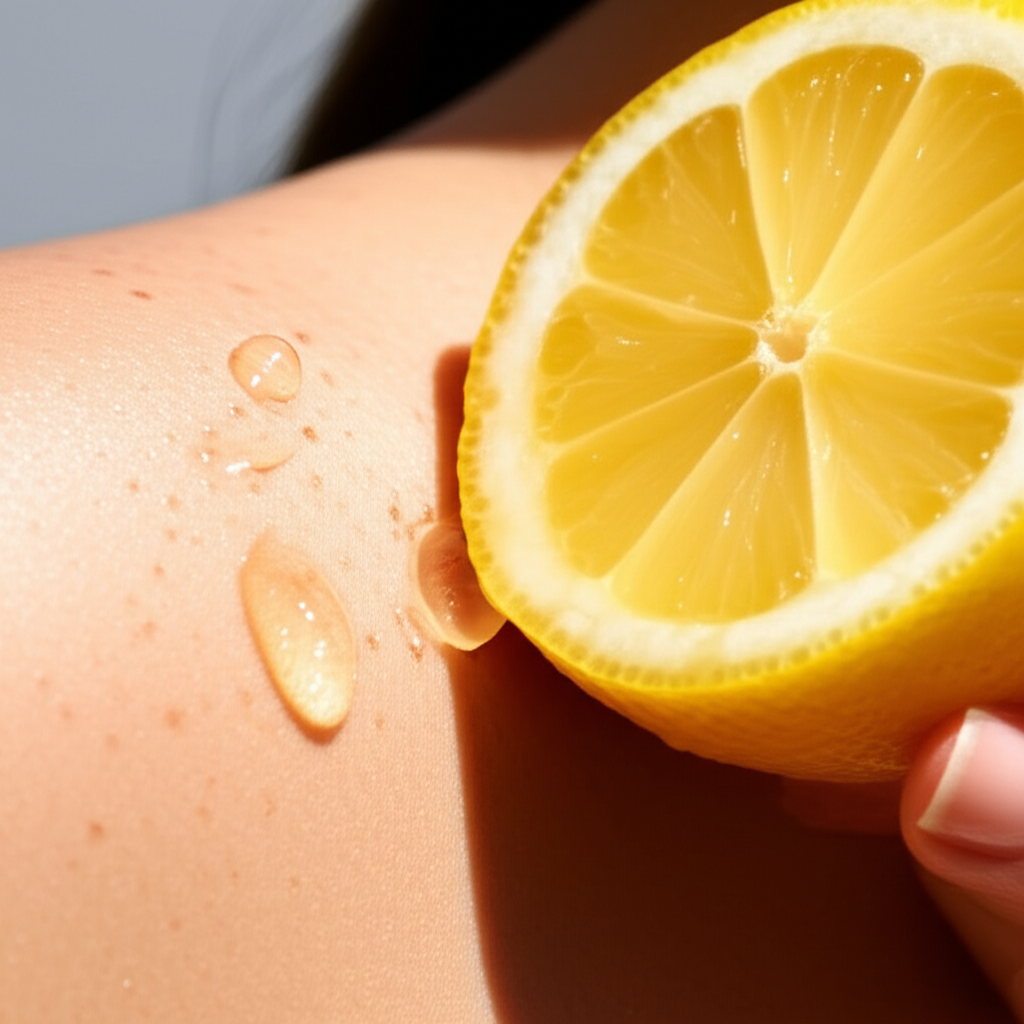
While lemon juice is often touted as a natural remedy for various skin concerns, its ability to permanently get rid of freckles is limited and comes with significant risks. For safe and effective freckle reduction, consult a dermatologist.
Key Takeaways
- Lemon juice can lighten freckles temporarily.
- It is not a permanent freckle removal solution.
- Lemon juice poses risks like skin irritation and sun sensitivity.
- Professional dermatological treatments offer safer, lasting results.
- Protecting skin from the sun is crucial for managing freckles.
Can Lemon Juice Get Rid of Freckles? The Shocking Truth
You’ve likely heard that squeezing a lemon can solve a lot of problems. Maybe you use it in your morning water, your salad dressing, or even to clean your cutting boards. But when it comes to your skin, can lemon juice actually get rid of freckles? It’s a common question, and the answer isn’t as simple as a squeeze. Many people hope for a quick, natural fix for their sun-kissed spots. While citrus fruits have some beneficial properties, using lemon juice directly on your skin for freckle removal can be tricky. Let’s peel back the layers and discover what science and dermatology say about this popular home remedy.
Understanding Freckles: What Are They?

Before we dive into lemon juice, it’s helpful to understand what freckles are. Freckles, scientifically known as ephelides, are small, flat, light brown or tan spots on the skin. They are caused by an increased amount of melanin, the pigment that gives skin its color. Sunlight exposure stimulates melanocytes (cells that produce melanin) to create more pigment, leading to the appearance of freckles. They are more common in people with fair skin, red or blonde hair, and blue or green eyes. Freckles are not harmful and are a sign of sun exposure.
Genetics play a significant role in who develops freckles. If your parents or close relatives have freckles, you’re more likely to have them too. However, the intensity and number of freckles can change throughout your life, often becoming more prominent during summer months and fading in winter due to varying levels of sun exposure. Understanding this natural fluctuation is key to managing expectations when exploring any treatment, natural or otherwise.
The “Lemon Juice for Freckles” Claim: Where Does It Come From?
The idea that lemon juice can lighten freckles stems from its natural acidic content, particularly citric acid. Citric acid is an alpha-hydroxy acid (AHA). AHAs are known for their exfoliating properties, meaning they can help shed the top layers of skin. The theory is that by exfoliating the skin, lemon juice might remove the pigmented cells and reveal lighter skin underneath, thus reducing the appearance of freckles.
Furthermore, some anecdotal evidence suggests that the vitamin C present in lemons might have a mild bleaching effect on the skin, contributing to the lightening of dark spots. This has led many to believe that a simple, inexpensive solution for freckles is readily available in their kitchen. However, the concentration of citric acid and vitamin C in lemon juice, and how it interacts with the skin, requires closer examination.
How Lemon Juice Might Affect Skin
Lemon juice is highly acidic, with a pH typically ranging from 2 to 3. For context, healthy skin has a pH of around 4.7 to 5.75. Applying such a strong acid to the skin can disrupt its natural barrier function. Here’s a breakdown of its potential effects:
- Exfoliation: As mentioned, the citric acid acts as an exfoliant. This can slough off dead skin cells, which might temporarily make freckles appear less noticeable.
- Photosensitivity: This is a critical point. The furanocoumarins present in lemon juice can make your skin significantly more sensitive to sunlight. This increased sensitivity can lead to severe sunburn, blistering, and hyperpigmentation (darkening of the skin) when exposed to UV rays, even after the lemon juice has been washed off. This condition is known as phytophotodermatitis.
- Irritation and Inflammation: The high acidity can cause redness, stinging, itching, and dryness, especially for individuals with sensitive skin. Repeated application can lead to dermatitis.
- Temporary Lightening: Any lightening effect is usually temporary. The skin will continue to produce melanin in response to sun exposure, and freckles can reappear or even darken if proper sun protection is not maintained.
It’s important to distinguish between lightening the skin and removing freckles. Lemon juice might offer a very mild, temporary lightening effect due to exfoliation, but it does not target the underlying melanin production that causes freckles. The risks associated with its use often outweigh any perceived benefits.
The Risks of Using Lemon Juice on Freckles
While the allure of a natural, DIY remedy is strong, the risks associated with using lemon juice directly on your skin are significant and often underestimated. These risks can lead to more skin problems than they solve. Here are the primary concerns:
- Phytophotodermatitis: This is perhaps the most serious risk. When compounds in citrus fruits, like lemon juice, come into contact with skin and are then exposed to UV light (sunlight), they can cause a severe inflammatory reaction. Symptoms include redness, burning, swelling, and blistering, which can leave behind dark marks that are harder to treat than the original freckles. Even if you wash the lemon juice off, residue can remain and react with the sun.
- Skin Irritation and Burns: The high acidity of lemon juice can strip the skin of its natural oils, leading to dryness, flaking, and redness. For individuals with sensitive skin, it can cause stinging, itching, and even chemical burns, especially if left on for too long or applied undiluted.
- Increased Sun Sensitivity: Even without causing phytophotodermatitis, the exfoliating action of lemon juice can make your skin more vulnerable to sun damage. This means you’re more likely to get sunburned, which can worsen existing pigmentation and increase the risk of premature aging and skin cancer.
- Uneven Skin Tone: If lemon juice is applied unevenly or if the skin reacts unpredictably, it can lead to patches of lighter or darker skin, creating an uneven complexion that is more noticeable than the original freckles.
- No Guarantee of Results: The effectiveness of lemon juice for freckle removal is largely anecdotal and not scientifically proven. The results, if any, are often minimal and temporary, making the risks involved not worth the potential outcome.
Given these risks, dermatologists strongly advise against using lemon juice as a home remedy for freckles or any other skin condition. The potential for causing harm and exacerbating skin issues is too high.
Scientific Evidence: What Does Research Say?
When we turn to scientific research, the evidence supporting lemon juice for freckle removal is scarce and largely unfavorable. While vitamin C is a well-known antioxidant and can indeed have skin-brightening properties in controlled formulations, the vitamin C in raw lemon juice is not in a stable or bioavailable form for topical application that effectively targets melanin production in a safe manner.
Studies on AHAs, like citric acid, do show their potential for skin exfoliation and improving skin tone. However, these studies typically use carefully formulated concentrations of AHAs in professional skincare products, applied under controlled conditions. Applying raw lemon juice, with its unpredictable and high concentration of acid, is far removed from these controlled therapeutic applications. The risk of irritation and photosensitivity from raw lemon juice far outweighs any theoretical exfoliating benefit for freckle reduction.
A report from the U.S. National Library of Medicine discusses the various causes and treatments of skin hyperpigmentation. While it mentions chemical peels and topical agents containing vitamin C and AHAs for lightening dark spots, it emphasizes that these are administered by medical professionals. It does not endorse the use of raw citrus fruits for such purposes due to safety concerns.
In essence, the scientific community and dermatologists do not recommend using lemon juice directly on the skin for freckle removal due to the lack of efficacy and the significant safety concerns, particularly the risk of phytophotodermatitis and skin irritation.
Safer and More Effective Alternatives for Freckle Management
If you’re looking to reduce the appearance of freckles or manage hyperpigmentation, there are many safer and scientifically proven methods available. Consulting a dermatologist is the best first step to determine the most suitable option for your skin type and concerns. Here are some effective alternatives:
1. Sun Protection: The Cornerstone of Freckle Management
This is the most crucial step, regardless of whether you have freckles or are undergoing treatment. Protecting your skin from the sun prevents existing freckles from darkening and new ones from forming.
- Daily Sunscreen: Use a broad-spectrum sunscreen with an SPF of 30 or higher every single day, even on cloudy days. Reapply every two hours when outdoors.
- Protective Clothing: Wear wide-brimmed hats and sunglasses to shield your face from direct sunlight.
- Seek Shade: Limit your time in direct sunlight, especially during peak hours (10 a.m. to 4 p.m.).
Sun protection is not just about managing freckles; it’s essential for preventing premature aging and skin cancer. Organizations like the Skin Cancer Foundation offer comprehensive guidance on sun safety.
2. Topical Treatments
Several ingredients in over-the-counter (OTC) and prescription creams can help lighten freckles and improve skin tone:
- Vitamin C Serums: Stable, well-formulated vitamin C serums can help brighten the skin and fade dark spots by inhibiting melanin production.
- Retinoids (Retinol, Tretinoin): These vitamin A derivatives accelerate cell turnover, helping to shed pigmented skin cells and revealing brighter skin. Tretinoin is a prescription-strength option.
- Hydroquinone: A potent skin-lightening agent that works by reducing melanin production. It is available in lower concentrations OTC and higher concentrations by prescription. It should be used with caution and under medical supervision due to potential side effects.
- Niacinamide: This form of vitamin B3 can help reduce the transfer of pigment within the skin, leading to a more even complexion.
- Kojic Acid, Azelaic Acid, Alpha Arbutin: These are other effective ingredients found in skin-lightening products that work by inhibiting melanin production.
3. Professional Dermatological Procedures
For more significant results, dermatologists offer in-office treatments:
- Chemical Peels: Superficial or medium-depth chemical peels use stronger acids (like glycolic acid, salicylic acid, or trichloroacetic acid) than lemon juice to exfoliate the skin and reduce pigmentation.
- Laser Treatments: Certain lasers, such as fractional lasers or intense pulsed light (IPL) therapy, can target melanin in the skin, breaking down pigment and reducing the appearance of freckles.
- Microdermabrasion: This procedure uses a device to gently exfolute the outer layer of skin, which can help improve overall skin tone and reduce the appearance of mild pigmentation.
These professional treatments are performed by trained practitioners, ensuring they are safe and tailored to your specific skin needs. They offer more predictable and lasting results compared to DIY remedies.
A Table of Lemon Juice vs. Professional Treatments
To better illustrate the differences, let’s compare lemon juice with professional dermatological treatments for freckles:
| Feature | Lemon Juice | Professional Dermatological Treatments (e.g., Lasers, Peels) |
|---|---|---|
| Effectiveness for Freckles | Minimal, temporary, unreliable | High, noticeable, often long-lasting |
| Safety | Risky (phytophotodermatitis, burns, irritation) | Generally safe when performed by a qualified professional |
| Cost | Very low (DIY) | Moderate to high |
| Application | DIY, often undiluted | Performed by trained professionals |
| Side Effects | Irritation, redness, burns, increased sun sensitivity, hyperpigmentation | Temporary redness, swelling, peeling (manageable); rare risks of infection or scarring |
| Speed of Results | Unpredictable, if any | Visible results after a few sessions |
| Underlying Cause Addressed | None | Targets melanin production and pigmented cells |
As the table shows, while lemon juice might seem like an attractive cheap option, professional treatments offer superior effectiveness and safety when managed by experts.
Pro Tips: Enhancing Your Skincare Routine
Beyond specific treatments, adopting a good overall skincare routine can significantly impact the appearance of freckles and the health of your skin. Always patch-test new products on a small area of your inner arm or jawline before applying them to your entire face. This helps you gauge your skin’s reaction and avoid widespread irritation.
Frequently Asked Questions (FAQ)
Q1: Will applying lemon juice to my freckles make them disappear permanently?
A1: No, lemon juice is not a permanent solution for freckles. Any temporary lightening effect is due to mild exfoliation and is not long-lasting. It does not address the underlying cause of freckles and carries significant risks.
Q2: Is it safe to put lemon juice on my face, even if I don’t go in the sun afterwards?
A2: It is still not recommended. Even without immediate sun exposure, lemon juice’s acidity can irritate and dry out your skin, potentially leading to redness and inflammation. The risk of phytophotodermatitis remains if you are exposed to UV light later.
Q3: How long should I leave lemon juice on my skin if I decide to try it?
A3: Dermatologists advise against leaving lemon juice on the skin at all. If you choose to experiment against professional advice, extremely short contact times (e.g., 1-2 minutes, followed by thorough rinsing) are sometimes mentioned in anecdotal advice, but this is still risky and not endorsed.
Q4: What are the signs of a bad reaction to lemon juice on the skin?
A4: Signs of a bad reaction include redness, stinging, burning, itching, increased dryness, peeling, and blistering. If you experience any of these, wash the area immediately with cool water and consider consulting a doctor or dermatologist.
Q5: Are there natural ingredients that are safer than lemon juice for lightening freckles?
A5: Yes, some natural ingredients are considered safer and more effective when used in well-formulated skincare products. These include stable forms of Vitamin C, licorice root extract, bearberry extract, and niacinamide. Always look for products designed for skin brightening.
Q6: How can I tell the difference between freckles and other skin spots?
A6: Freckles are typically small, flat, light brown or tan, and appear symmetrically on sun-exposed areas. Other spots, like moles, lentigines (age spots), or melasma, can vary in size, shape, color, and may have different causes. If you are unsure about a skin spot, it’s always best to consult a dermatologist for proper diagnosis.
Conclusion
The question of whether lemon juice can get rid of freckles has a clear, albeit perhaps not the desired, answer. While the citric acid in lemon juice offers a theoretical exfoliating effect, its high acidity and photosensitizing compounds make it a risky and largely ineffective home remedy for freckle removal. The potential for skin irritation, burns, and severe sun sensitivity leading to phytophotodermatitis far outweighs any minimal, temporary lightening you might achieve.
For anyone seeking to manage or reduce the appearance of freckles, the most reliable and safest path lies in diligent sun protection and consulting with a dermatologist. They can guide you toward scientifically proven topical treatments and professional procedures that are effective, safe, and tailored to your individual skin needs. Remember, healthy skin is beautiful, and protecting it from harmful practices is the first step towards achieving a radiant complexion.